Source: Guardain/GettyImages
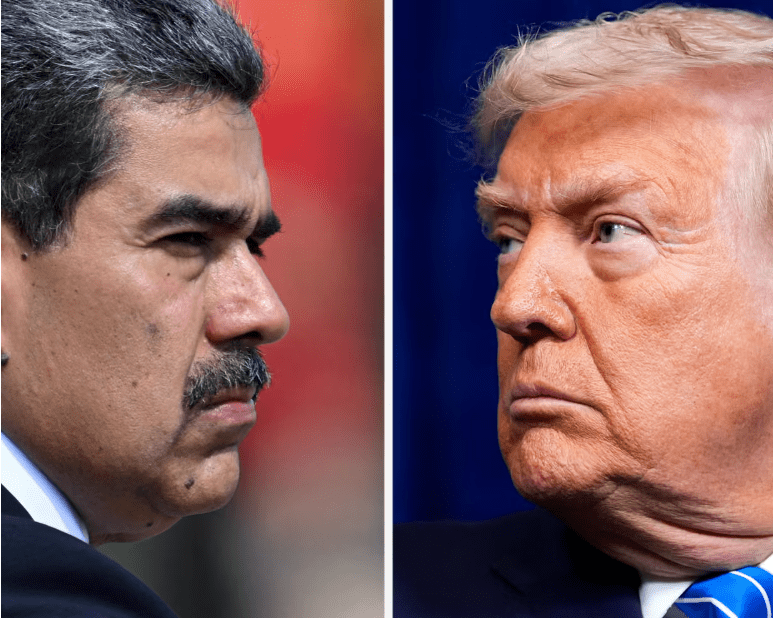
On January 3, 2026, the United States launched a major military operation in Venezuela that included air strikes and a special-operations raid. President Nicolás Maduro and his wife, Cilia Flores, were captured and, according to U.S. officials, transported to a U.S. vessel and will face charges in U.S. courts. This intervention — the most direct U.S. military action in Latin America since 1989 — shocked the region and the world. The following explains, in simple terms, the main causes and the likely motives behind the U.S. action, based on verified reporting and official statements.
What Triggered the US Attack on Venezuela?
The immediate trigger for the U.S. military operation was a combination of criminal charges, long-term security concerns, and intelligence that U.S. officials said justified a precise strike. U.S. authorities have accused Maduro and members of his inner circle of running a narco-state: protecting drug trafficking networks, helping move large amounts of cocaine and other drugs, and enabling violence tied to criminal groups. The U.S. Department of Justice had earlier brought indictments against Maduro and senior Venezuelan officials on narcotics and weapons charges; those legal actions were cited by U.S. leaders as part of the justification for the raid.
Why Did the US Target the Maduro Government?
Beyond the criminal indictments, the U.S. framed Maduro’s government as a danger to regional stability. American officials argued that Maduro’s administration had eroded democratic processes — for example, by overseeing disputed elections in 2024 that the opposition and some international observers said were not free or fair — and that the government sheltered and collaborated with criminal networks. U.S. leaders also argued that removing Maduro would disrupt those networks, weaken the so-called “Cartel de Los Soles” and reduce drugs flowing to international markets. These claims were central to the U.S. public rationale for the strike.
Did the Capture of Nicolás Maduro Play a Role?
Source: Luis Jaimes/AFP/Getty Images
Yes. Capturing Maduro was a primary objective. According to reporting, the operation involved elite U.S. special forces units — including Delta Force — and extensive intelligence work, reportedly including a human source inside Venezuela. The raid was planned over weeks, delayed by weather and other operational constraints, and executed quickly to seize the president and key figures. U.S. leaders said Maduro was taken from a heavily fortified location and moved to a U.S. vessel. The capture was designed to be decisive: removing the country’s top leader would cripple the command structure that U.S. officials said protected criminal networks.
How Venezuela’s Oil and Economy Influenced the US Decision
Venezuela sits on some of the largest proven oil reserves in the world. For decades, foreign powers and companies have viewed control of Venezuela’s energy resources as strategically important. U.S. officials, including President Trump, repeatedly linked their actions to concerns about stolen or misused oil assets and argued the country’s economic mismanagement enriched a small elite while the population suffered. Critics of the operation say economic and oil interests likely played at least a supporting role in the decision to act, alongside security and legal rationales. The U.S. has also signaled interest in ensuring that Venezuela’s oil infrastructure could be restored and reopened to international investment if a transitional government took power.
What Role Did Donald Trump Play in the Decision?
President Donald Trump personally approved and publicly described the operation. Reports indicate the White House and senior officials — including Secretary of State Marco Rubio and Vice President JD Vance — were involved in planning and messaging. Trump monitored the raid in real time and framed the operation as enforcing U.S. law, stopping drug trafficking, and protecting American interests. He also emphasized that there had been offers for Maduro to surrender before the strike and that the U.S. had “off-ramps” available. Trump’s rhetoric linked the operation to his broader political themes of law enforcement, energy security, and a tougher foreign policy.
Why Did the US Act Now Instead of Earlier?
U.S. officials had been preparing for intervention for weeks. Planning reportedly began in mid-December 2025, and weather, timing, and strategic considerations delayed the strike until conditions were right. American leaders had also tried non-military measures — sanctions, naval pressure, and strikes on vessels alleged to be involved in drug trafficking — but said those measures were insufficient to stop the behavior they described. Officials argued that a window of opportunity emerged when operational conditions and intelligence were favorable, and that delaying further risked losing the chance to capture top targets.
You Might Like: Who are Kerstin Emhoff Children? All about Douglas Emhoff’s First Wife and Children
Was the US Action Approved and Legal?
The legality of the U.S. action is contested. Some U.S. lawmakers and international legal experts argue that major military operations require Congressional approval and that acting unilaterally inside another country raises serious questions under international law and the United Nations Charter. Supporters in the U.S. point to criminal indictments and the need to enforce domestic law against international fugitives as a legal rationale, and some officials described the operation as being carried out “in conjunction with U.S. law enforcement.” However, critics note that criminal charges alone do not automatically justify cross-border military force under international law, and several countries condemned the U.S. strikes as violations of Venezuela’s sovereignty.
How Does This Compare to Past US Interventions?
The Maduro operation is the most direct U.S. military intervention in Latin America since the 1989 invasion of Panama, when U.S. forces removed Manuel Noriega. Comparisons include the speed and focus on capturing a single leader, but there are differences in international context, media scrutiny, and legal debate. Historically, U.S. interventions in the hemisphere have provoked long-term regional distrust and often led to complicated aftermaths; analysts warn that removing a leader does not guarantee stability or a smooth transition. The Noriega case, for example, resulted in years of political fallout even after the dictator’s removal.
What Are the Consequences of the US Attack on Venezuela?
Source: Matias Delacroix/AP
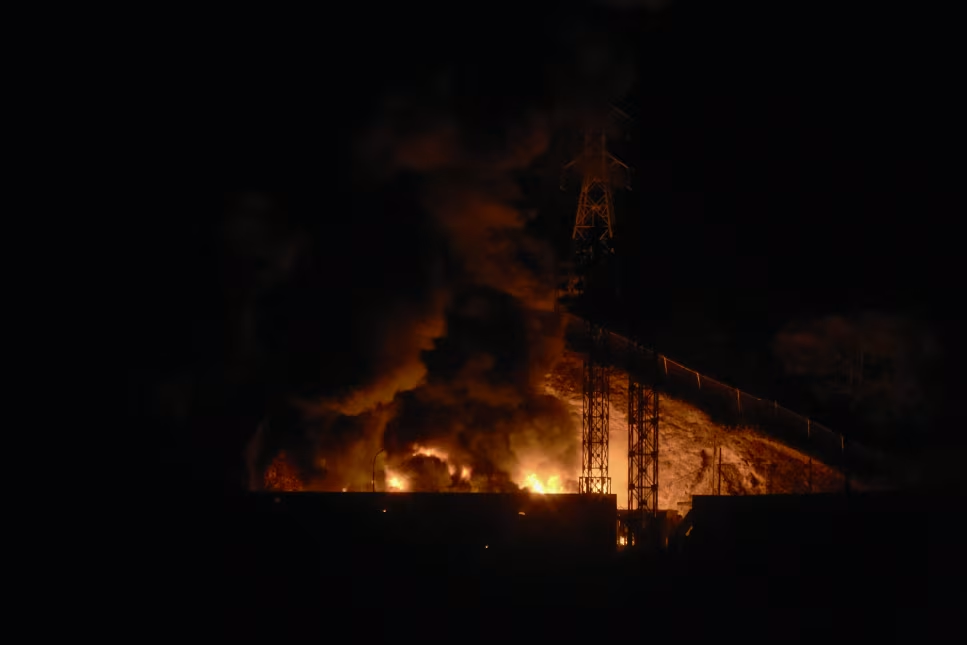
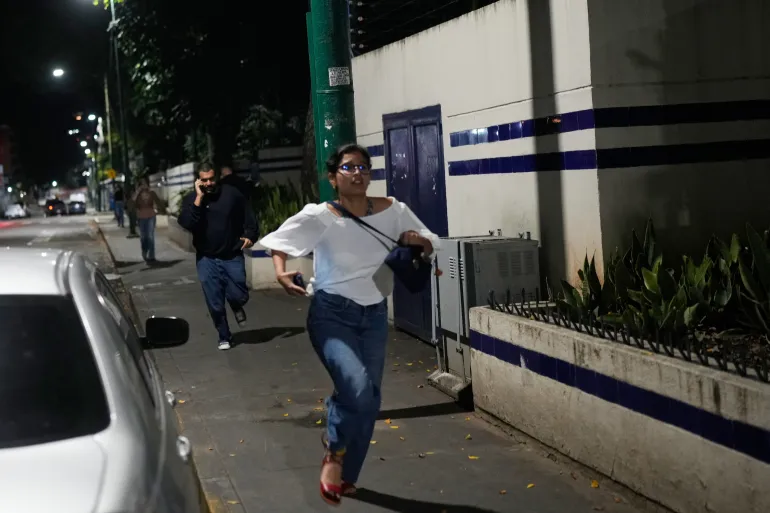
Immediate consequences were physical damage in targeted areas, including strikes on military facilities and infrastructure, reports of power outages, and civilian fear and displacement. The Venezuelan government declared a national emergency and called the U.S. action a criminal aggression. International reaction was sharp and divided: countries such as Russia, China, Cuba, and Mexico condemned the strikes, while some governments in the region and beyond welcomed the removal of Maduro. Economically, analysts warned of short-term oil price volatility; but some also said that in the medium term oil markets could stabilize if Venezuela’s energy sector reopens under a different government. The human cost — displaced citizens, damage to infrastructure, and uncertainty for millions — is likely to be significant.
You Might Like: Steve Garvey Children: How many children does Steve Garvey have?
What Happens Next After the US Attack on Venezuela?
After the capture, the immediate political future is uncertain. The U.S. has indicated it will be involved in shaping the transition, and some Venezuelan opposition leaders called for installing a rival presidential claimant. At the same time, senior Maduro allies, military officials, and regional actors retain influence. Expect ongoing diplomatic activity at the United Nations and in regional organizations, possible attempts at negotiation or international mediation, refugee flows, and a complex domestic power struggle. The U.S. will face pressure to explain its legal basis to Congress and the world and to present a credible plan for restoring stability.
FAQs — Why Did the US Attack Venezuela?
1. Was the US acting to stop an immediate attack on the United States?
A: No. Officials said the operation was driven by long-term criminal allegations, national security concerns, and political objectives, not by an immediate military threat to U.S. soil.
2. Will Maduro be tried in the United States?
A: U.S. officials have said Maduro faces criminal charges in U.S. courts, and the Justice Department unsealed new indictments. The president and his wife were reportedly taken toward New York. But legal proceedings, where they will be held, and how extradition or detention applies will depend on U.S. judicial and diplomatic steps.
3. Is this legal under international law?
A: Many international lawyers say that arresting a foreign head of state by force inside his country without the host state’s consent raises serious questions under international law. Supporters cite criminal indictments and self-defense or law-enforcement rationales; critics say those do not eliminate the need to respect sovereignty.
4. Could this lead to a wider war?
A: The risk exists. Reactions from allies of Venezuela, such as Russia and Iran, and regional instability could increase tensions. Much will depend on how other countries and international organizations respond and how quickly a stable interim government can be formed.
5. How will this affect oil markets?
A: Short-term volatility is likely as traders react to new risks. Over time, if sanctions are lifted and production resumes under new management, markets could stabilize. Analysts have given mixed forecasts.
Also Read: Thailand Myanmar Earthquake 2025: 7.7 Magnitude Quake Shakes Bangkok and Myanmar

Manoj Ghimire is a skillful content writer with more than two years of experience in this field, who can cover the celebrity news and lifestyle.
For contact email: [email protected]